

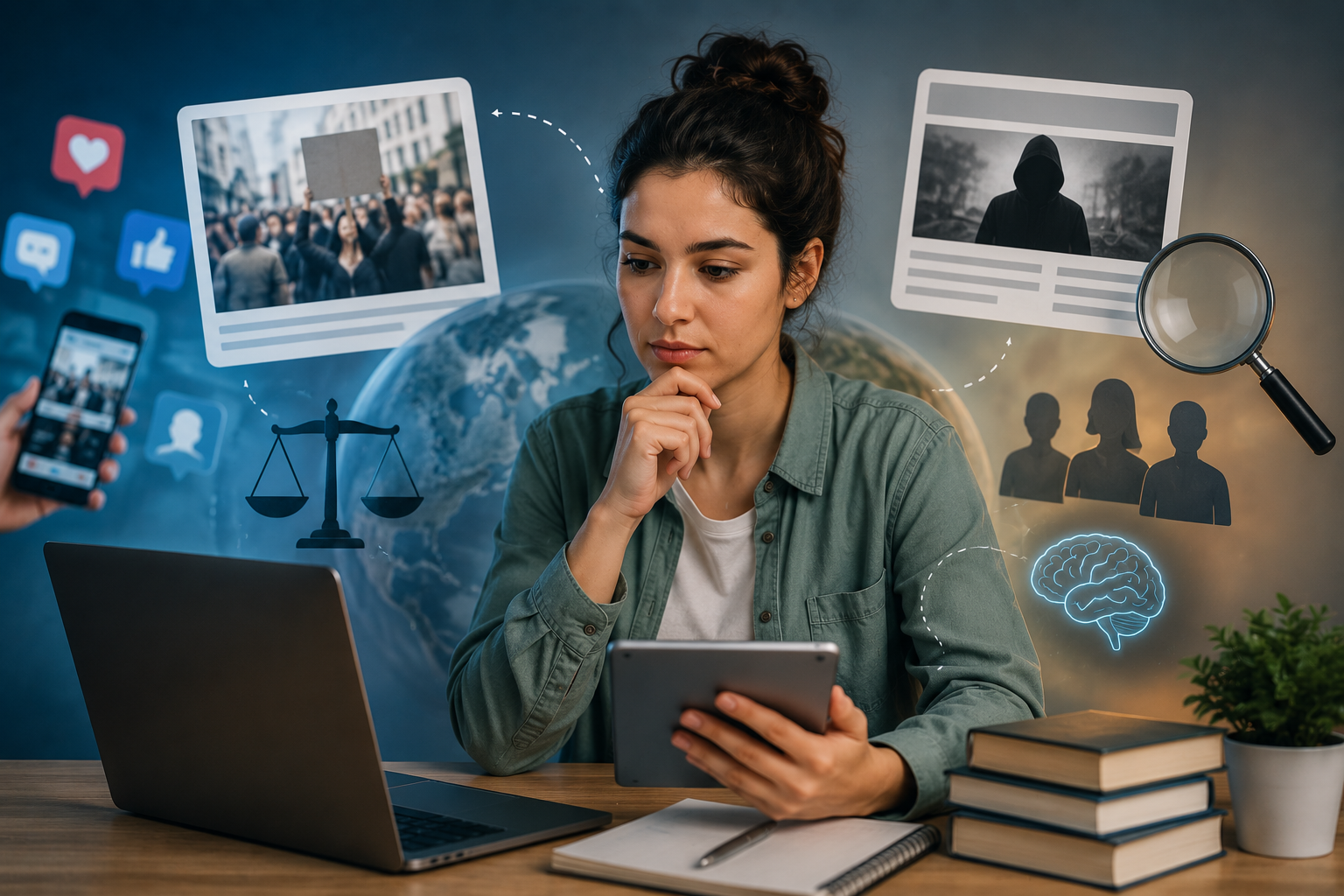
This course provides educators and trainers with practical knowledge, teaching strategies, and classroom resources to help learners navigate today’s complex digital information landscape. Participants will explore how to foster media literacy, critical thinking, and responsible digital citizenship among students of different ages and backgrounds. They will learn how to teach students to evaluate online information, identify misinformation and bias, analyse media messages, and make informed decisions. The course also examines the impact of social media, Artificial Intelligence, and digital technologies on information consumption and public discourse. By the end of the course, participants will be equipped with practical methodologies, lesson ideas, and educational resources to integrate media literacy and critical thinking into their teaching practice.
Day 1: Teaching Media Literacy in the Digital Age
- Understanding Media Literacy in Education
- Why Media Literacy Matters for Today’s Learners
- The Digital Information Environment
- Challenges Faced by Students Online
Day 2: Teaching Students to Evaluate Information
- Fact-Checking Strategies and Verification Tools
- Teaching Students to Identify Misinformation and Disinformation
- Recognising Bias and Persuasive Techniques
- Classroom Activities for Information Evaluation
Day 3: Fostering Critical Thinking Skills
- Critical Thinking as a Core Competence
- Teaching Questioning and Evidence-Based Reasoning
- Practical Classroom Methods and Discussions
Day 4: Social Media, AI and Digital Citizenship
- Understanding Social Media influence, Algorithms and Personalised Content
- Artificial Intelligence and Information Reliability
- Promoting Responsible Digital Citizenship
- Ethical Participation in Digital Communities
Day 5: Designing Media Literacy Learning Experiences
- Integrating Media Literacy Across the Curriculum
- Developing Media Literacy Lesson Plans
- Creating Learning Activities
- Building a Toolkit of Media Literacy Resources
Course Objectives
- Understand the role of media literacy and critical thinking in education.
- Develop practical strategies for teaching students how to evaluate information and media content critically.
- Learn methods for helping learners identify misinformation, disinformation, bias, and manipulation.
- Design engaging learning activities, projects, and lesson plans that integrate media literacy and critical thinking skills.
- Build a collection of practical resources and tools for implementing media literacy education.



Reviews
There are no reviews yet.